Caring for Those Around You: Towards a Wesleyan Ecology

Wesley’s passion for understanding God’s creation helped him imagine and pursue a kind of ministry (i.e., Christian stewardship) that understood we are called to care for creation as a whole.
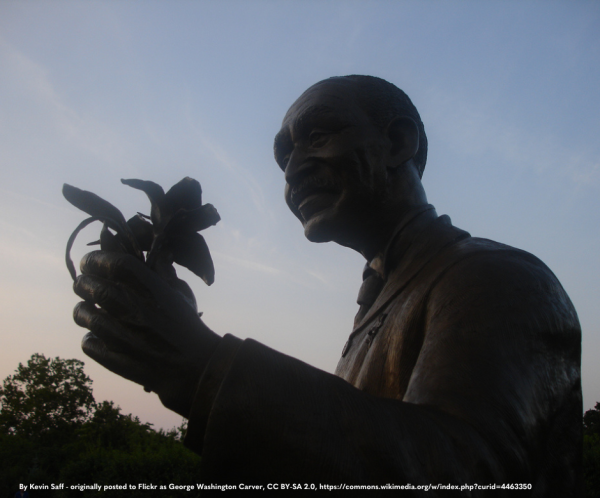

While many science and faith conversations are dominated by questions about how life began on Earth or if God exists, Black people aren’t questioning that, said Grant. What they do wonder about can be discussed through the life of Carver: “Why is there so much evil and why are we treated less than human? We want to look at the nature of evil, and what does it mean to be human? What does it mean to be disregarded and dehumanized?”
Outside of holiness circles, John Wesley’s contributions to our theological understanding, his approach to social action leading to transformation, and the use of science as a tool for social improvement have gone unnoticed or altogether ignored. As this introduction hints, my approach to theology is decidedly Wesleyan and, in the same way Greg Cootsona circles back to St. Clive when he writes, I cannot help but talk about St. John Wesley and his contributions to Christian thought.
You have heard of the White and Draper “conflict thesis” about the historical relationship between religion and science, right? It is a myth historians have debunked, but recent scholarship suggests that in debunking it they have missed some fascinating complexity.
Does history show a conflict between religion and science? According to Peter Harrison, a careful study of history finds a very different narrative.
Of course, history reminds us that for every abolitionist like cousin Emily, there is at least one story of a slave owner who was also motivated by faith. The history of Christianity, like any family history, is terribly complex with examples that make us proud and others that remind us of the need for confession and forgiveness. This, of course, is also true of the history of Christianity and science.